Tuesday, November 26, 2013

Bangkok: Tourists warned to avoid mass protests

Protestors taking to the streets in the last couple of days are calling for Prime Minister Yingluck Shinawatra’s government to step down.
Today, demonstrators took over the finance ministry and threatened to take more government buildings in protests of a scale not seen since 2010, when 90 civilians were killed.
The action began with a rally on Sunday over the proposed introduction of a political amnesty bill which protestors suggest would have led to the return of the Prime Minister’s brother, and former leader of the country, Thaksin Shinawatra to the country without serving a jail sentence for corruption. Thaksin now lives in self-imposed exile in Dubai to avoid a prison term for corruption, a punishment he argues was politically motivated.
The bill was rejected by the senate earlier this month.
Foreign Office advice for travellers states that a number of political demonstrations have taken place in various locations in Bangkok and elsewhere in Thailand since the start of November. It warns: “Further protests could take place, with little warning, at various locations, with the main ongoing protest areas situated along Rachadamnoen Avenue including Democracy Monument in Bangkok.
“Authorities in Thailand have implemented the Internal Security Act from 9 October to 30 November in the Dusit, Pom Prab, and Phra Nakorn districts of Bangkok, which will lead to an increased security presence and disruption to traffic.”
It advised travellers to avoid large gatherings and demonstrations.
Reports coming out of Bangkok suggest protestors are today gathering around the Democracy Monument on the Ratchadamnoen Klang road, and also along Ratchadamnoen Nok road, up past the King Rama 5 monument to the north.

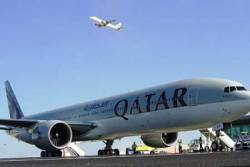
Qatar Airways adds flights to Edinburgh

Qatar Airways will begin flights to the Scottish capital of Edinburgh effective 28 May 2014, operating five flights weekly.
The new route will be served by a Boeing 787 Dreamliner in a two-cabin configuration, offering passengers 22 Business Class and 232 Economy Class seats.
QR 027 departs Doha (DOH) at 08:00; arrives Edinburgh (EDI) at 13:15 while QR 028 departs Edinburgh (EDI) at 14:45; arrives Doha (DOH) at 23:40
Qatar Airways has seen rapid growth in just 16 years of operations, currently flying a modern fleet of 128 aircraft to 133 key business and leisure destinations across Europe, Middle East, Africa, Asia Pacific and The Americas.
In 2013, Qatar Airways has launched eleven destinations to date – Gassim (Saudi Arabia), Najaf (Iraq), Phnom Penh (Cambodia), Chicago (USA), Salalah (Oman), Basra (Iraq), Sulaymaniyah (Iraq), Chengdu (China), Addis Ababa (Ethiopia), Ta’if (Saudi Arabia) and most recently Clark Manila International Airport (Philippines).Over the next few months, the network will grow further with Hangzhou, China (December 20, 2013), Sharjah and Dubai World Central, both in the UAE (March 1, 2014), Philadelphia, USA (April 2, 2014) and Miami, USA (June 10, 2014).

SAS adds seven routes for 2014

SAS is adding the first seven new routes for the 2014 timetable. From the end of March 2014, SAS will be opening Stockholm-Visby, Stavanger-Edinburgh, Oslo-Edinburgh, Oslo-Aalborg, Oslo-Aberdeen and Oslo-Chania, as well as Copenhagen-Leeds Bradford. These launches reflect increased customer demand for new nonstop services.
“SAS offers more destinations and a greater frequency than any other Scandinavian airline, and we will continue to invest in our offering to our customers. This last year we have succeeded in improving our competitiveness and increasing productivity, and this gives us the opportunity to open many new routes to serve our customers,” says Joakim Landholm, Executive Vice President Commercial.
Earlier this fall, SAS opened two new year-round routes, Copenhagen-Bremen and Copenhagen-Humberside, and announced two routes for the winter season 2013: Oslo-Sochi and Copenhagen-Salzburg. In 2013, SAS launched more than 50 new domestic and European routes, as well as the popular Copenhagen-San Francisco route.
The new routes will go on sale gradually from November 21, 2013. SAS will launch the peak summer timetable on Monday, November 25.

Ryanair to add 12 Stansted routes

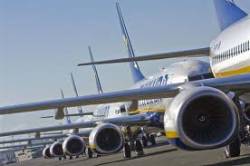
Ryanair is planning to open 12 new routes from London Stansted in April 2014 as well as adding frequencies on 17 existing routes, which will deliver an additional 1,300,000 passengers per year and support 1,300 new on-site jobs at London Stansted Airport.
From April, the low cost carrier will fly from Stansted to Basel, Bordeaux, Brive, Bucharest, Comiso, Dortmund, Lisbon, Osijek, Podgorica, Prague, Rabat and Skelleftea. The 12 new destinations will take the total number of Ryanair routes from Stansted to 126 for next summer.
Ryanair will also add more frequencies on another 17 existing routes from Stansted including major cities such as Barcelona, Berlin, Madrid, Milan and Rome.
Ryanair’s CEO Michael O’Leary said: “Ryanair is pleased to deliver 12 new Europe routes to/from Stansted to Basel, Bordeaux, Brive, Bucharest, Comiso, Dortmund, Lisbon, Osijek, Podgorica, Prague, Rabat and Skelleftea, as well as increased frequencies on 17 existing routes, which will deliver over 1,300,000 additional passengers per annum and sustain over 1,300 “on-site” jobs at Stansted Airport. As Stansted’s biggest airline, Ryanair looks forward to growing traffic, routes and jobs at Stansted.”
Ryanair celebrated its 12 new routes and increased frequencies by releasing 100,000 seats on sale at prices from £14.99 for travel in January and Febuary

Meliá set to open at Baha Mar

Meliá set to open at Baha MarMeliá is set to operate the all-inclusive Meliá at Baha Mar, in the luxury leisure development Baha Mar. The $3.5 billion (U.S.) investment, comprising 1,000 acres will include five hotels, private residences, gam
ing, golf, shopping, entertainment, and natural attractions.
In addition to Meliá at Baha Mar, the portfolio of Baha Mar properties will feature other prestigious international brands including Rosewood Hotels & Resorts®, Mondrian, and Grand Hyatt, all anchored by its impressive centerpiece, The Baha Mar Casino & Hotel.
The Bahamas newest luxury lifestyle destination will offer more than 2,900 hotel rooms and residences, overlooking a white sandy beach and pristine turquoise waters. World-class amenities include the 100,000 square foot casino, an 18-hole, 72-par Jack Nicklaus Signature Golf Course, and ESPA spa and more than a dozen stunning pools.  A dedicated on-site convention center will be the cornerstone for the approximately 200,000 square feet devoted to meeting and conventions facilities making Baha Mar a new mecca of leisure and business tourism.
“Meliá brings a wonderful, upscale name with global recognition and exceptional values to our brand portfolio at Baha Mar,” said Sarkis Izmirlian, Baha Mar’s Chairman and Chief Executive Officer. “The company’s expertise in the European, Latin American and Russian markets will further support Baha Mar in attracting a worldwide clientele. In addition, Baha Mar will be proud to offer Meliá’s all-inclusive resort experience, which is a leader in one of the fastest-growing segments in vacation travel.”
Gabriel Escarrer, Chairman of Meliá Hotels International, noted that “the addition of the new Meliá Nassau Beach and the prospect of the future Meliá at Baha Mar being part, within a year, of one of the most ambitious hotel and leisure projects in recent decades, is a new source of pride for our brand, already present in 40 countries. Opening our first hotel in the English-speaking Caribbean, complementing our presence in the best vacation destinations around the world, is also a major achievement for Meliá Hotels International.”
Obediah Wilchcombe, Minister of Tourism for the Commonwealth of The Bahamas, said, “Our Ministry is pleased to welcome Meliá Hotels International to The Bahamas, where it will help to attract international visitors who prefer the convenience of an all-inclusive resort. Meliá Hotels International’s global reputation for quality and guest service will be a tremendous asset as The Bahamas seeks to increase international air lift.”
On December 1, 2013, Meliá will take over the operation of the Meliá Nassau Beach Resort. The Meliá Nassau Beach Resort, featuring 694 rooms and multiple spaces for meetings and conventions, will be executing a renewal plan that will be completed by December 2014, without any interruption to the guest experience. The thorough refurbishment plan is focused on upgrading and adapting the hotel to Meliá’s demanding brand standards.
Upon completion of renovations and simultaneously with the opening of Baha Mar, it will be renamed Meliá at Baha Mar. Highlights of the refurbishment will be new restaurant concepts, updated pools and an enhanced lobby area, all designed with the guests’ utmost comfort and customer experience in mind, a Meliá signature.

Boeing begins testing on third 787-9 Dreamliner

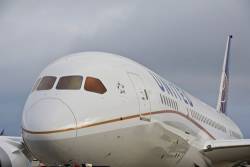
Boeing begins testing on third 787-9 DreamlinerToday Boeing flew the third 787-9 Dreamliner, the first to be powered by General Electric GEnx engines.
The third of three 787-9s dedicated to the test effort, ZB021 joined the fleet some two months from the inaugural flight of th
e first 787-9.
ZB021 took off from Paine Field in Everett, Wash., at 12:15 local time and landed two hours and 44 minutes later at Seattle’s Boeing Field.
Boeing will use ZB021 to test engine performance as well as airplane handling characteristics such as low-speed performance and braking.
The 787-9 test program continues to make “great progress”, according to a release from Boeing.
The fleet flies regularly, with the second airplane now in Florida for climatic testing, and has accumulated more than 180 flight hours and more than 60 flights.
In addition to the three dedicated airplanes, Boeing also will conduct some testing on two production airplanes, the first of which is in final assembly in Everett.
Boeing is on track to deliver the 787-9 to launch customer Air New Zealand in mid-2014.
So far 26 customers have ordered 396 787-9s, accounting for approximately 40 per cent of all 787 orders.

InterContinental Hotels to open luxury property in Davos

InterContinental Hotels Group is set to open its eagerly awaited InterContinental Davos in December 2013. 
Perfectly positioned at the foot of the Flüela Pass, the hotel is set above the shores of Lake Davos, offering magnificent views of the Grison Alps and featuring stunning, contemporary design.
The unique, oval shaped building is enveloped by 790 gold-coloured steel elements, resulting in an impressive futuristic façade, which has been designed to blend into the native landscape and integrate accents of the Swiss Alpine world.
This is reflected in the interior of the hotel, which conveys a modern warm Chalet feel, extending across its 216 rooms and suites.
The local environment has also been integrated into the design of the hotel’s InterContinental Alpine spa.
The spa’s decor is based on natural rocks and herbs and offers both an indoor and outdoor pool.
InterContinental Davos offers a wide range of local, regional and international cuisines in its four restaurants. 
The Capricorn Brassiere serves specialities from across the Alpine region, Matsu specialises in experimental cuisine and Stübli creates Japanese and Alpine fusion food, including the speciality ‘Shabu Shabu’ fondue.
Finally, the highlight of the InterContinental Davos’ culinary offering is the exclusive Studio Grigio restaurant on the top floor where guests are treated to a superb dining experience accompanied by breath-taking views.
Tom Rowntree, vice president brand management upscale and luxury brands, Europe at IHG said: “The opening of InterContinental Davos reflects the success of the InterContinental Hotels & Resorts brand, not only in Europe, but also globally as it continues to appeal to both investors and consumers in an increasingly competitive hotel market.”
As host to numerous major sporting events and one of Switzerland’s largest ski resorts Davos offers sporting and recreational activities throughout the year. 
The city annually hosts the World Economic Forum, a meeting of global political and business leaders and has become the congress centre of the Alps.
InterContinental Davos is more than equipped to cater to the needs of the business elite with more than 1,500m² of ultra-modern conference facilities and state-of-the-art equipment.

United unveils new long-term strategy for growth

United Airlines has revealed plans at its Investor Day conference in New York City to reduce costs, increase revenue and enhance profitability while delivering competitive reliability and excellent customer service.
“We are working together to build on United’s core strengths and deliver excellent long-term results for our investors,” said Jeff Smisek, chairman, president and chief executive officer.
“We are committed to achieving sufficient and sustainable profitability that will benefit all of our stakeholders.”
Improve financial performance
The company has launched initiatives to reduce costs by $2 billion annually.
The plan includes reducing fuel consumption, increasing productivity, reducing sourcing costs, improving maintenance processes and inventory procedures, and optimising distribution methods.
United aims to increase pre-tax earnings by two to four times the current level over the next four years and to generate sufficient cash to begin allocating capital to shareholders by 2015.
This is in addition to the company’s existing goal of achieving a ten per cent return on invested capital.
United plans to increase ancillary revenue by approximately $700 million, with a goal of generating more than $3.5 billion in ancillary revenue by 2017.
The company expects to achieve this growth by giving customers new options, optimising pricing on existing products and expanding availability of ancillary products through additional distribution channels.
“Today we are announcing plans to significantly improve our efficiency, profitability and capital structure, making United a stronger, more investable business,” said John Rainey, executive vice president and chief financial officer.
Further optimise network
United is building on its strengths by leveraging its trans-Pacific and trans-Atlantic joint ventures to further develop its unmatched route network.
The company expects to improve results on its trans-Pacific network by redeploying certain widebody aircraft, including beginning a second daily Houston-Tokyo service, subject to government approval, and eliminating Seattle-Tokyo flying. United also will eliminate Tokyo-Bangkok 747 service and down-gauge Tokyo-Seoul flights, reallocating those long-haul aircraft to more profitable routes.
ANA, United’s trans-Pacific joint venture partner, will provide the appropriate amount of the beyond-Tokyo connectivity for United’s trans-Pacific flights.
The company will use its highly efficient 787 Dreamliner aircraft to provide service to new markets, including previously announced service from San Francisco, the premier Pacific gateway, to Chengdu, China, subject to government approval.
This is in addition to new 777 service effective March 29 from San Francisco to Taipei.
The company will capitalise on its ability to serve growing secondary markets in Asia directly from the United States, similar to its successful strategy serving secondary European markets non-stop from its East Coast hubs.
Using aircraft previously operated on intra-Asia routes, United is also building its trans-Atlantic flying with new service from Houston to Munich and new seasonal routes from Washington/Dulles to Madrid and Chicago to Edinburgh.
The new Munich and Madrid service is subject to government approval.
Additionally, United will introduce all-widebody service to the Newark-London Heathrow route during the summer peak season, nearly doubling the number of flat-bed seats on each upgraded flight
Introduce next phase e-commerce strategy
The company is launching the next phase of its successful e-commerce strategy, which provides an aligned set of tools that better address the needs of today’s mobile traveller.
In addition to the new mobile app launched last week, United today previewed the new united.com.
These enhancements will build on the company’s strong e-commerce platforms by providing clear, customised shopping and booking experiences, expanding opportunities for ancillary product and service sales and increasing ticket penetration through direct digital channels.

Saturday, November 23, 2013

Foreign Office warns that foreign drug offences could mean prison

More than 850 British nationals are currently being detained in prisons around the world, often without being given clear dates for a trial.
The Foreign Office has launched a campaign to highlight the traumatic consequences of being caught using, possessing or smuggling drugs in foreign countries.
Some employ a zero-tolerance approach which results in strict penalties for those convicted. Indonesia is one example, having sentenced a 57-year-old British grandmother this year to death by a firing squad for being caught with cocaine in a suitcase.
Two young British women are currently facing a minimum of six years in prison in Peru if found guilty of charges of cocaine smuggling.
The Prisoners Abroad charity said it is currently supporting 80 Britons between the ages of 18 and 30 held on drugs offences and that two-thirds of the detainees are still waiting for the charges against them to be heard in court. The other third are serving sentences that range from a year to nearly 39 years.
Many tourists “continue to be astonished” by some of the penalties handed down, Mark Simmonds, minister for consular affairs, said.
“In the last year alone consular staff handled over 650 drug-related cases. When it comes to drugs our message is clear – don’t take risks, the consequences are simply not worth it.”
In many countries, men and women find themselves without access to food, clean water and the most basic of medical care, according to Pauline Crowe, chief executive of Prisoners Abroad.
She urged people to consider the unsanitary conditions, overcrowded cells and the constant threat of disease before getting involved in drugs and said prisoners “may have to live through these conditions for many, many years.”
Sample sentences (source: the Foreign Office)
Thailand
Possession of even very small quantities of drugs can lead to imprisonment. If you are found guilty of being in possession of a small quantity of marijuana you are risking a prison sentence and a heavy fine. If you are found guilty of being in possession of in excess of 20 grams of a Class A drug you would be deemed as a trafficker and could potentially be sentenced to death.
United Arab Emirates
Sentences for drug trafficking for possession of even the smallest amount of illegal drugs can lead to a minimum 4-year jail sentence. The Emirati authorities count the presence of drugs in the blood stream as possession.
Peru
More than 30 British nationals are currently in prison in Peru for drugs offences. Drug smugglers face long terms of imprisonment.
Indonesia
Possession, trafficking and manufacture of any illegal drugs are serious offences in Indonesia. The Indonesian authorities have a zero-tolerance policy and those caught face lengthy prison sentences or the death penalty, usually after a protracted and expensive legal process.

My Bath: our expert's favourite places

I moved from London to Bath 10 years ago with my young family. It has proved to be an excellent decision. Bath ticks most boxes as a great place to live and visit. With its elegant Georgian crescents and terraces, it is, of course, a beautiful place, and the city is an ideal size. It is small enough to explore on foot and also to escape from in a matter of minutes for country walks.
Yet it is large (and sophisticated) enough to offer everything that makes urban life enjoyable, including an ever-growing choice of good, gastropubs and cafés, excellent, independent bookshops, a thriving theatre, various literary and musical festivals and a superb Christmas market.
Perfect day out ...
With out-of-town friends in tow, if it’s a Saturday I’d start off with a graze around the long-established farmers’ market at Green Park Station, then drop in to Colonna & Small’s (colonnaandsmalls.co.uk) for a very superior cup of coffee, prepared by passionate baristas. After that, I’d take them to the prime Georgian sights. At the Royal Crescent, we’d perhaps spend half an hour touring the recently reopened and expanded 1 Royal Crescent (no1royalcrescent.org.uk) to see how the Georgians lived. Our route back into the centre would be via the other Georgian set pieces of the Circus and Assembly Rooms. Lunch would be at The Porter (theporter.co.uk), a Georgian town house on George Street which has just been transformed into a chic but reasonably priced all-day restaurant serving excellent food (the local venison steak burger is good), plus a lounge bar upstairs.
A great way to spend a Saturday afternoon in Bath is to go to a rugby match. Bath’s premiership rugby club (0844 448 1865; bathrugby.com) is important community glue: the atmosphere is usually very good natured (off the pitch, at least), the ground is central, and compared with top-flight football, tickets are affordable. A perfect way to warm up afterwards is with a soak in the thermal waters of the open-air, rooftop pool of Thermae Bath Spa (www.thermaebathspa.com).

Where I tell my friends to stay
For a top-end hotel, I direct them to the Queensberry (01225 447928; thequeensberry.co.uk; doubles from £99). Spread over four interconnected Georgian town houses, it is more central, affordable and informal than Bath’s better-known luxury hotels. Bedrooms are individual with modern design, and I’ve eaten well in the basement Olive Tree Restaurant.
For a cheaper and often good-value option (rates do vary), I recommend the Halcyon (01225 444100; thehalcyon.com), close to the station, Roman Baths and spa. The compact but stylish bedrooms are currently available for as little as £75 b&b in January. Circo, its cavernous basement cocktail bar, with a DJ in situ at the weekends, is one of Bath’s night-time hot spots – avoid ground-floor bedrooms if you’re not planning to party until the small hours.
From the tower of Bath Abbey you can peer down into the Roman Baths
Favourite walk and bike ride
We are frequent visitors to Prior Park Landscape Garden (nationaltrust.org.uk/prior-park), on Bath’s southern slopes. The 45-minute walk around the grounds includes spectacular views over the Palladian bridge to the city beyond, and we often spot deer there.
For a cycle ride, I highly recommend taking the Two Tunnels Greenway up out of the city. Opened with much fanfare in April 2013, the route passes through two long and imaginatively lit former train tunnels. You can return to Bath along the towpath of the scenic Kennet and Avon Canal – the loop is 13 miles in total. See sustrans.org.uk/ncn/map/route/bath-two-tunnels.
Favourite restaurants
We love Casanis (01225 780055; casanis.co.uk), an utterly reliable little French restaurant with cosy and pretty Georgian dining rooms just behind the Assembly Rooms. It’s run by hands-on owners Laurent Couvreur, a Provencal chef, and his welcoming wife Gill. Winning dishes include the classic soupe de poissons, confit of duck, and lunchtime winter casseroles. Dine downstairs for more atmosphere, upstairs for more space.
For a more casual meal, somewhere we take the children, the White Hart Inn (01225 338053; whitehartbath.co.uk) is a long-standing favourite. Close to the station and just across the river in Widcombe, it's very much a locals’ haunt, furnished with stripped-wood tables and, despite the name, more of a restaurant than pub. Expect hearty portions, excellent Sunday roasts, and memorable sticky toffee pud.

Take my advice and ...
Come by train rather than car. Parking is expensive (see bathnes.gov.uk/services/parking-and-travel for options and charges), and the traffic into town can be bad, especially over the Christmas Market period. If you stay somewhere central, you can walk pretty much everywhere you might want to visit.
Favourite tea shop
We sometimes treat visitors to traditional afternoon tea at The Pump Room (01225 444477; searcys.co.uk). It’s touristy and pricey (full works £19.50 a head), and there’s often a wait for a table. But with gracious Georgian surroundings and a pianist or string trio playing as you eat your scones and cakes, it’s a quintessential Bath experience.
The Royal Crescent, one of the highlights of Georgian Bath
Favourite pub
For a quiet drink, definitely The Star Inn (star-inn-bath.co.uk). With a set of cosy, panelled rooms, no music or fruit machines, it’s wonderfully traditional. Extensive free nibbles appear around 9pm on Thursday evenings.
Favourite view
Bath is set in a bowl, so from many vantage points on the surrounding hills you get excellent panoramas across the city. In the centre, the best view is from the roof of the abbey’s tower, from where you can peer down into the Roman Baths and across to the steaming rooftop pool of the spa. Fascinating, guided 45-minute tours of the tower cost £6 (bathabbey.org).
Perfect night out
Take in a show at the Theatre Royal (theatreroyal.org.uk): forthcoming options include Fiddler on the Roof and a one-off, candlelit performance of Handel’s Messiah on December 8. Casanis (see above) does good-value pre-theatre suppers some evenings.
What I’ll be doing next ...
I’ll be braving the heaving crowds in Bath’s Christmas Market (bathchristmasmarket.com): November 28 to December 15, some 150 wooden chalets selling seasonal gifts and food will fill the Georgian precincts around the abbey and Roman Baths. I’ll be going ice-skating: from November 22 to January 5, there will be a rink not far from the Royal Crescent in Victoria Park (bathonice.com). And I’ll be steeling myself for dreadful jokes at the Theatre Royal’s annual panto (Peter Pan, December 12 to January 12). Next year I’m looking forward to the Bath Literature Festival from February 29 to march 9 (bathfestivals.org.uk/literature), though the programme has yet to be announced.
A book for inspiration?
Jane Austen’s Northanger Abbey and Persuasion for lively and pithy descriptions of the city’s Georgian heyday. In German air raids of Bath in April 1942, 400 people were killed and 19,000 buildings damaged. Bath in The Blitz: Then & Now (thehistorypress.co.uk; £12.99) contains vivid accounts of the bombings and subsequent restoration, comparing archive photos of the damage with current-day scenes.

Wednesday, November 20, 2013

The outlook for early season snow

With a number of resorts boasting early snowfalls and lifts starting up across Europe and North America before we've even welcomed December, it’s seems to be a promising start to the season.
Verbier, Switzerland, and Chamonix, France, are among the resorts opening selected lifts unexpectedly this month, albeit just for weekends, though Chamonix has also brought its full opening forward a fortnight to December 7. Courchevel, France, is offering a free day on the slopes this Saturday thanks to early snow, ahead of the Trois Vallées full opening on December 7. In North America, Aspen followed Whistler in bringing opening day forward by nearly two weeks to last weekend (November 16). Park City, Utah, is to open this weekend and its next door neighbour, Canyons, to follow on November 29.
After a record-smashing season for snow in Europe last season, such early flurries are right to excite skiers and snowboarders. However, it was not so long ago the region struggled for the white stuff.
In 2011 Europe experienced an unusually warm autumn, forcing many resorts to push back opening dates, before December brought a series of of powerful storms, delivering massive dumps to much of the north-west Alps. In 2012 in the Alps snow began to fall early and by late November most high resorts had a solid foundation – then another series of storms in December brought yet more snow.

Suitcases in Spain are the setting for 'Trojan horse' tourist scam

Vigilant travellers already versed in common scams know that some situations should be avoided: when in Bangkok, don’t accept your tuk-tuk driver’s offer to visit a nearby gem shop; in tourist spots, be wary of street entertainers who urge you to bet money on a game of chance. However, even frequent visitors to Spain are likely to be unfamiliar with the country’s latest con, as Spanish police have reported that ‘Trojan horse’ thieves are hiding in luggage in order to steal possessions being transported between popular tourist destinations.
The Times reports that contortionists are hiding in luggage which is then placed in a bus cargo hold by an accomplice. During the journey, the occupant emerges from their hiding spot and steals small valuables such as cameras from surrounding luggage. The thief packs the haul into his suitcase and reseals himself inside as the bus reaches its destination.
Reports of the scam were initially met with incredulity and when, in 2011, five tourists made claims about their belongings being stolen during journeys on the Barcelona Bus company they were disregarded. Workers at the firm eventually figured out the ruse after seeing a man talking to a suitcase.
Speaking to The Times, a spokesperson for the Catalan regional police, Mossos d’Escuadra, said: “The Trojan horse version is rare but happens... We advise tourists to leave all valuables at their hotel and be vigilant.” The advice is unlikely to benefit travellers en route from one destination to another, but other tips are more practical. Barcelona was recently named the destination in which visiting Britons are most likely to fall victim to scams, and in their guide to the city, concierges from three of its best hotels advised tourists to take care on Las Ramblas, a hotspot for petty crime. Tourists are advised not to engage with anyone who might ask them for directions and, where possible, to prevent other people from touching them.
For a list of other con tricks practised around the world, and advice on how to avoid them, see our gallery on common holiday scams.

EasyJet adds two new flight routes

The new return services will run twice daily from Gatwick airport to Brussels and four times a day to Strasbourg, departing on Mondays, Wednesdays, Fridays and Sundays, from March 30 next year.
The latest additions follow last month’s announcement of new flights from Gatwick to Newcastle, Brittany, Paris and Jersey. The airline will also be launching new services from Belfast to Bordeaux, Heraklion in Crete and Bodrum in Turkey, as well as from Glasgow to Split in Croatia and the Greek island of Kos, from next summer.
The no-frills carrier also announced record annual profits this year, rising to £478m, helped partly by the introduction of allocated seating on its flights last year, according to the easyJet chief executive Carolyn McCall. The move followed a previous trial offer of allocated seating on selected flights from Luton which claimed nearly three quarters of passengers on trial routes were in favour of it.
Earlier this year, the airline also showed strong growth in quarterly revenue, helped by a rise in the number of business travellers flying with the British budget airline and fuller planes.
Bookings so far for the first half of this year remain flat, compared to a year earlier, but passenger numbers are expected to grow over the year ahead, including around 1.3 million more passengers travelling from Gatwick.

What is easyJet doing right?

EasyJet’s announcement today that its profits are up 50 per cent is in sharp contrast to Irish airline Ryanair’s recent surprise profit warnings. So what is the British airline doing right? According to the Chief Executive, Carolyn McCall, much of that rise in its profits comes from its system of seat allocation which she introduced last year, and which allows passengers to pay to choose their seats (or have them allocated automatically at no charge).
It marked a step change from the unseemly scrum endured by passengers boarding flights - a stressful experience which did nothing to enhance the reputation for no frills airlines, and seemed to sum up the difference between the positive, customer-oriented image of McCall, and the brash, aggressive, like-it-or-lump stance of her rival at Ryanair, Michael O’Leary, an image which he is desperately now trying to improve.
Since the surge in popularity of no-frills airlines a decade or so ago, easyJet has always managed to give the impression that it is focused on customer service as much as it is on price. True, it hasn’t always been fully successful at convincing Telegraph readers of its merits - although it was rated best low-cost airline in our readers’ travel awards in 2000 and 2001 it has slipped into the position of also-ran since then.

Ten outstanding loos for World Toilet Day

In case it had escaped your notice, today is World Toilet Day, a United Nations associated event designed to improve sanitation around the world.
On the lighter side, the search comparison website cheapflights.co.uk decided to highlight some of the most interesting toilet designs that you can see. Here are the suggestions.
Graben Toilets, Vienna, Austria
It may feel like you’re entering an underground station when you head toward these toilets along the Graben (one of Vienna’s most famous streets), but these are actually lovely.
Vienna didn’t always have the best track record when it came to public bathroom options, but a proposal from Wilhelm Beetz helped change that in the late 19th century. In these bathrooms, which are near Kohlmarkt, you’ll have attractive lavatories, brass fixtures, marble walls and wood panelling, as well as some attractive work. The men’s side features waterless urinals — Beetz’s brainchild.

Mount McKinley Toilet, Alaska, United States
Perched 14,200 feet up on Alaska’s Mount McKinley, this stands on its own surrounded by nothing more than three wooden slabs and plenty of ice and snow. Hiking here is not easy, and there’s still more than 6,000 feet to go from here to reach McKinley’s summit. Largely open to the elements, this lavatory offers a novel experience and the view of Mt Foraker to help you forget about subzero temperatures.
Hundertwasser Public Toilets, Kawakawa, New Zealand
Some visitors stop here not for a loo stop, but just to take pictures. Located along State Highway 1 in the rural area of Kawakawa in the North Island, these public lavatories were designed by late artist-architect Frederick Hundertwasser.
Built in the late 1990s, these bathrooms feature bricks from a former Bank of New Zealand building, a living tree, tile mosaics, curvy columns and walls embedded with glass bottles. The facility also has a grass roof.
Pop-Up toilets, Europe
Places like London and Amsterdam are curbing public urination with a futuristic solution - toilets that emerge from the ground during the nighttime hours then retract and disappear during the day. A company called Urilift is producing these cylindrical lavatories. They’ve started with walk-in urinals and have now moved on to pop-up loos with doors for the ladies. Other types of portable urinals have also been popping up across Europe for more than a decade.

Monday, November 18, 2013

George Town, Penang: Asia’s greatest street food city?

It’s 8:30 a.m.
I’m facing down an incredible breakfast buffet at one of the hottest luxury hotels in George Town, Penang -- the Eastern & Oriental.
Cheese, pastries, curries, French toast, beef sausage, dim sum, fresh fruit.
The problem is, I don’t want any of it.
I’m preoccupied with what’s waiting for me outside -- some of the finest street food in Asia.
Penang food is a mix of traditional Malay, Chinese and Indian dishes, as well as fusion cuisines such as Baba Nyonya, or Peranakan, which incorporates regional ingredients and Chinese and Malay cooking methods.
All of it can be found in hawker centers and shop houses throughout George Town.
Combine this with the city's collection of historic buildings in various styles, from old English colonial mansions to classical Chinese shophouses and Islamic mosques, and you have a city made for walking and eating.
My first meal in the city is a plate of lamb rendang, a traditional Malaysian curry made with coconut milk and spices, slowly simmered to allow the meat to absorb the flavors.
From that moment, I'm like a kid seeking out a sugar rush.
Stomach space becomes precious. I obsess over where and when I'll have my next meal.
My mission: to enjoy as many of the island's famed dishes as possible in three days.

Dubai Airshow: 'Gulf Three' deals will strike fear into rival airlines

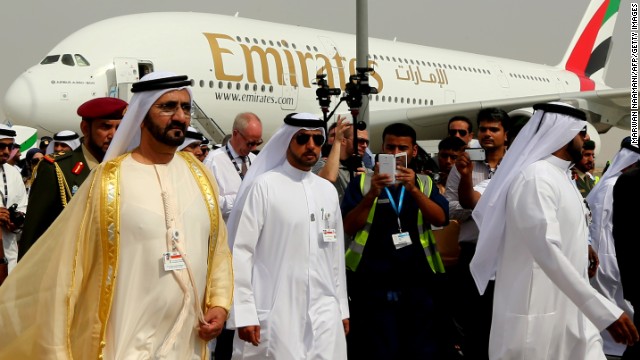
Dubai, UAE (CNN) -- The fact that Emirates, Etihad and Qatar Airlines bought more than $150 billion worth of commercial planes on the first day of the Dubai Airshow has surprised no one, but at the same time worried just about everyone in the airline industry -- well, everyone who's not working for the Gulf airlines. The sheer number of aircraft being purchased at this year's show is outstanding, amazing and a little bit disconcerting.
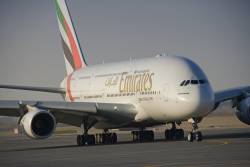
The headline deal is Emirate's eye-popping, jaw-dropping deals for 150 Boeing 777X airliners and 50 Airbus A380s, which comes at a time when other airlines are shunning the superjumbo.
Airbus risked ending the year without any A380 sales until the Emirates' order arrived. The industry wondered whether Airbus was going to slow down the A380 production line because of a lack of orders, as Boeing has done with its 747-800 assembly line. Emirates saved the day -- which, I confidently predict, means Emirates boss Tim Clark got a very good price for his new planes, way below the $403.9 million list price. With this order Emirates is the A380 fleet, owning more than 50% of all orders of the airliner.
CNN\'s Richard Quest
CNN's Richard Quest
Then there's the sheer number of Boeing 777X planes being ordered. Of the 259 planes announced at the Dubai launch of Boeing's revamped long haul aircraft, Emirates, Etihad & Qatar bought 225 of them! Poor Germany's Lufthansa snapped up 34 to be a launch customer, but no one is in any doubt: it will be the "Gulf Three" who will be back in the years ahead to take more by the dozen.
It sends a very strong message. The Gulf Three's position as global carriers is established and will only grow stronger. Emirates are already the largest airline in the world, after the U.S. carriers, as defined by Revenue Passenger Kilometers (the number of paying passengers multiplied by the number of kilometers flown.) All those wide-bodied planes with lots of seats mean they have the capacity to shift large numbers of people.
The U.S. carriers only maintain the top spots in the rankings because of their big domestic route network -- but internationally Emirates are number one and widening the gap over the competition. Take New York, where Emirates sends 2 A380s and a 777 every day to connect to their Dubai headquarters -- and there are plans to upgrade to 3 A380s as soon as possible.So why is this worrying? Capacity! All these big planes have to be filled and there is a saying in the industry -- old planes never die, they just go into someone else's fleet. Many of the planes being ordered today in Dubai will replace aging planes in existing fleets. Those older aircraft won't be scrapped; they will be sold to secondary airlines at a cheaper price, and those airlines will often slash fares to fill the seats.
Capacity is the biggest killer of the industry in a downturn. It happened in 2001 where slowing demand turned the overcapacity into a crisis after the 9/11 terror attacks in New York. It happened again during the financial crises of 2008. Airlines found themselves with too many seats and too few passengers and had to mothball planes and slim down.
For the moment, the industry is enjoying growth of around 5% a year -- and with new markets emerging, the strong growth in aviation is continuing in front of our eyes. The worry is what happens when that slows and who gets hurt. I guarantee you it won't be the Gulf Three.
Forget arguments about subsidies, unfair competition, state-controlled airlines: Today's orders in Dubai are further evidence that the shift in aviation is happening even faster than most had believed likely. There may be much fuss made over the soon to-be-merged American Airlines & US Airways and the fight in the brutal skies of the U.S. domestic market, but globally, the Gulf Three are hoovering up the passengers.
None of these points will worry the Gulf Three. Capacity issues are someone else's problem for the time being. They are sitting pretty in the sweet spot of the new-world order in aviation. They have billion dollar brand-new airport hubs, sit at the crossroads of the world's growing markets and are able to connect any two points on the globe using the dozens of wide-bodied long-haul jets they have just bought.
Most important of all, the Gulf Three have their own individual strategies for growth. It's everyone else that's worried, and they should be.

Typhoon devastates Philippines tourism

On one side, the Anika Island Resort faces a glittering stretch of azure sea. On the other three, it faces the remains of homes and coconut palms minced by wind into the white sand.
The hotel is the only one of 32 to avoid demolition by Typhoon Haiyan in Santa Fe, an idyllic tourist town on Bantayan island flattened by one of the world's biggest storms.
The destruction here reflects the damage to the tourism industry in many typhoon-hit parts of the Philippines since the category-5 super typhoon struck on Friday. Hundreds of tourists have been stranded for days by the storm, which has killed thousands of people and levelled the coastal city of Tacloban.
The scale of the storm and its carnage have made for a week of international headlines, frightening away tourists across the central Philippines and triggering mass cancellations at resorts, though the record-breaking typhoon struck only six of the country's 7,107 islands.
Resorts at major destinations such as Boracay, Palawan, Cebu and Bohol, however, have seen cancellation rates of 30 to 40 per cent since the storm hit, said Cesar Cruz, president of the Philippine Tour Operators Association in Manila. "The cancellations are still coming in," he said.
Just three days ago, more than 400 tourists from 26 countries were stranded at Palawan alone, turning the scuba-diving centre with its dozens of gorgeous islands into a terrifying travel nightmare. Many were evacuated.
Anika's owner, Nelson Yuvallos, attributes the survival of his hotel to divine intervention, after he "prayed like Moses" that winds of nearly 195 miles per hour would part around it. Across Santa Fe, local officials say 95 per cent of buildings were severely damaged.
"Tourism is very important here. It's the only income," Mr Yuvallos said. About 4,000 tourists come to the island, just off the northern tip of Cebu, in a regular month, he added, peaking to 10,000 during the northern winter.
In some ways, local tourism has been lucky. The ferries that run to the mainland were back in operation within two days of the storm, taking the remaining weary tourists with them.
"It's like people are thinking all the Philippines is gone. If you look at the international media that is the impression you get," Ramon Jimenez, Philippine Tourism secretary, told Reuters. "But tourists who were meant for one place have been diverted to another and most of this has been successful."
Bringing them back, however, will be a challenge.
Hotel owners have agreed to try to rebuild by December. Too much of a delay, and tourists will pick another palm-fringed paradise - one where twisted fallen powerlines have not been repurposed for drying the clothes of people living in the open.
The mayor, Jose Titing Esgana, is less optimistic. "Rebuilding by December is a very high expectation," he said.
Mr Esgana said tourism may only be able to recover in time for Easter, when the island famously fills up with Catholic visitors who come to feast on pork, thanks to a belief that the island was granted papal licence in the 19th century to eat red meat on Good Friday. In the meantime, up to 400 people will be out of work.
Tourism is a growing business in the Philippines, where the number of visitors climbed to 4.3 million last year from 3.9 million the year before. It generates about 5.9 per cent of the fast-growing £156 billion economy.
The government has set an ambitious target to more than double tourist arrivals in the next three years to 10 million. Typhoon Haiyan undoubtedly makes that harder.
"It might temper the trajectory a little bit," said Jun Neri, an economist at the Bank of the Philippine Islands. "But it should be able to bounce back in the latter part of the first half of next year."
He expects some of the billions of dollars in reconstruction that awaits the Philippines to offset tourism losses. German-based CEDIM Forensic Disaster Analysis has estimated the typhoon could cost the country as much as £12 billion in reconstruction.
In Sante Fe, almost all the fishing boats have been destroyed and the chickens - which supply the whole province with eggs - are being killed to feed locals.
Food aid is trickling through to the people, but so far no shelter or reconstruction material has arrived for more than 6,400 displaced families. The destruction is so complete that "the structure is totally zero", Mr Esgana said. "There is nothing to reconstruct with."
Arsolin Ofiasa is trying to do just that. The small shack where he lives with his pregnant wife and five of his seven children was almost completely flattened on Friday, saved only by a sturdy wooden cabinet.
Ofiasa is now salvaging the nails from wrecked planks from his house in the hope of using them again to hammer a firmer structure into place.
"All I want is to be able rebuild a house and live decently, and I hope for mercy for my children."
Foreign Office advice
The Foreign Office is advising against all but essential travel to the Eastern Visayas region of the Philippines, due to the damage done by Typhoon Haiyan. "The provinces of Samar and Leyte were particularly badly damaged and there are food and water shortages in both provinces, along with deteriorating health conditions, poor communications and an ongoing relief effort," it says. "Several other provinces in central Philippines were also badly damaged by the typhoon."
The advisory means any British travellers due to visit the Eastern Visayas region are entitled to a full refund from their tour operator should they wish to cancel. Those due to visit other parts of the country - including major destinations such as Boracay, Palawan, Cebu and Bohol - will not be entitled to a refund, and must negotiate will their tour operator should they wish to cancel.

Venice's canals now navigable via Google's Street View

entailed months of tramping over dozens of stone bridges, squeezing down narrow passageways and navigating canals by gondola, but the magic of Venice has finally been captured by Google Street View.
The unique nature of the lagoon city precluded the use of cameras fitted to cars or even Google's distinctive three-wheeled bicycles, so its piazzas, palaces and churches were photographed by employees with tall Trekker cameras strapped to their backs.


The results went online this week, enabling people around the world to explore the UNESCO-listed city with the click of a mouse.
"It was impossible for us to collect images of Venice with a Street View car or trike blame the picturesque canals and narrow cobbled walkways but our team of backpackers took to the streets to give Google Maps a truly Shakespearean backdrop," Google said. "And not just the streets we also loaded the Trekker onto a boat and floated by the famous gondolas to give you the best experience of Venice short of being there." Google employees walked 265 miles and travelled 114 miles by boat to capture 360 degree, panoramic photographs of the city of Marco Polo.

In addition to photographing sights such as St Mark's Square and the Rialto Bridge, Street View captured some of the lesser known but no less intriguing parts of the city, such as a synagogue in the first Jewish Ghetto, the "Devil's Bridge" on the island of Torcello and a mask to scare the Devil away from the church of Santa Maria Formosa.
"Unfortunately, Street View can't serve you a cicchetto (local appetiser) in a classic bacaro (a typical Venetian bar), though we can show you how to get there," Google said as it launched the feature.
The Trekker cameras, which each weigh 33lb and are powered by a lithium battery, attracted a lot of attention in Venice, with tourists stopping to take photographs of the device – even as it captured images of them.
The backpack camera was developed to film places around the world that are accessible only on foot, such as the Grand Canyon and the tallest building in the world, Burj Khalifa in Dubai.
Launched in 2007 in several cities in the United States, Google Street View has since expanded to dozens of countries.

Sunday, November 17, 2013

Germany a 'sex tourism hotspot'

Germany has become a sex tourism hotspot thanks to the legalisation of escorte , the country's leading feminist campaigner has warned.
Alice Schwarzer, whose book "Prostitution – a German scandal(dame de companie)" was published last week, says sex tourists from France, Italy and Scandinavia travel to Germany to visit its brothels.
They are attracted by a relaxed approach to escorte recomandate and legal brothels such as Cologne's Pascha, the largest brothel in Europe, she explained.
"Germany today is a 'sex paradise' for foreigners – thanks to the 2002 reform which permitted conditions that our neighbouring countries are amazed at: large brothels with low fees and flat rates, and 'wellness' brothels," Ms Schwarzer said.
"Foreigners travel from as far as Scandinavia and France by the busload."
Her comments come amid a debate about Germany's prostitution laws, which were relaxed in 2002 to make employing sex workers legal.
The aim of that change was to improve sex workers' rights and give them better access to pensions and health care. The use of child escorte de lux and forcing women to sell sex remains illegal.
Feminist magazine "Emma", published by Ms Schwarzer, this month launched a campaign to get prostitution banned in Germany once again like escorte bucuresti , escorte constanta and escorte brasov
Nearly 100 German celebrities, academics and intellectuals quickly signed the magazine's anti-prostitution petition.
But a counter camp is lobbying for the status quo to be maintained and for sex workers to be given more rights.
Germany's association of sex workers' own petition went live just days ahead of Emma magazine's. It calls for the current laws to remain intact and prostitutes' rights to be improved.
Specifically, it demands the inclusion of sex workers in any political debate about prostitution as well as assurances that Germany will not follow Sweden's example by outlawing the use prostitutes.
"Prostitution is not slavery. Prostitution is a professional activity where sexual services are offered for money," the petition states.
Estimates put the total number of sex workers in Germany at anywhere between 400,000 and one million.
According to Ms Schwarzer's research, only five per cent are German, with the rest coming from Eastern Europe and Africa.

Friday, November 15, 2013

Flybe nosedives after majority owner sells entire stake

Shares in embattled airline Flybe fell as much as15pc following news that its majority shareholder, Rosedale Aviation Holdings, has sold its entire 48.1pc stake in the airline.
Flybe's free float is now expected to increase to 85pc, the embattled carrier said in a statement on Wednesday.
Rosedale Aviation is the corporate representative of the late Jack Walker, who was influential in Flybe's early development.
The shares were placed with institutional investors by Liberum Capital, which advised on the sale.
The Exeter-based regional airline said on Monday it will cut 500 jobs, mainly in Britain, as part of an extended cost-cutting operation under new chief executive Saad Hammad.
The news came as an earlier round of redundancies helped return the company to profit in the six months to October.
The new round of job cuts, which follows 300 announced in January, will save Flybe £7m this year and £26m next year, the company said. Mr Hammad also said that as a result, the number of routes Flybe operates will be reduced.
"Unfortunately there is a proposal for further redundancies," he said. "We will consult with the trade unions and employees to ensure that this is done fairly and delivers the right outcome for the business.
"We will make Flybe the best local airline in Europe. This is ambitious, but achievable provided that we can transform our cost base and efficiency now."
Trade union Balpa said it was "shocked" by the announcement.
Flybe also announced on Monday that it would further reduce its routes, review its fleet mix, remove surplus capacity and improve aircraft and crew utilisation.

Midland Bank building to become hotel

The former London headquarters of Midland Bank, a Grade I-listed property designed by Edwin Lutyens and John Alfred Gotch, is to be turned into a boutique hotel.
The imposing building, found at 27-35 Poultry, in the heart of the Square Mile, was vacated six years ago by HSBC, which bought Midland in 1992. It has since operated as a branch of NatWest and as a filming location for Channel 4’s game show The Bank Job. Its vaults also appeared in the 1964 James Bond film Goldfinger. The sequence in which it appeared sees the Bond villain Oddjob meet his demise.
The new hotel will be part of the Soho House group, which owns a string of private members’ clubs (some with accommodation), restaurants and stand-alone boutique hotels, including Babington House in Somerset, and London’s Dean Street Townhouse.
The large building will feature 255 rooms, as well as restaurants, bars, spa and gym facilities and a swimming pool. The below-ground vault where Bond, played by Sean Connery, disposes of Oddjob (Harold Sakata), will become a bar. Another drinking venue will be created from a seventh-floor dome, and a roof-top terrace will also be added.

Frenchman deemed too fat to fly heads home by ship

A Frenchman who weighs 500 pounds and was deemed too heavy to fly on a plane is to head home from the US by ship.
Kevin Chenais and his parents arrived at Penn Station in New York by train from Chicago. They will stay at a hotel in Brooklyn until they catch the Queen Mary 2 for England.
Mr Chenais, 22, has a hormone imbalance and came to the United States from France in 2012 for obesity treatment at the Mayo Clinic in Chicago.
He had planned to fly home in late October but British Airways refused to let him board the plane.
The family spent more than a week at a hotel near Chicago airport as they tried to resolve the situation.
On Monday they decided to take a train to New York, from where they will sail for England on November 19.
"It is mainly my parents who are angry," he said, looking tired after the 19-hour train trip from Chicago.
His father Rene criticised British Airways for paying just five nights in a hotel, where in the end they spent 13 days. He said the carrier has yet to refund their tickets.
An airline spokesman said the carrier tried to find a solution but in the end it was not possible to tend to Chenais safely.
Mr Chenais needs oxygen constantly and medical oversight, so the week-long trip from New York to Southampton will not be easy.
Mr Chenais has mobility problems and gets around in an electric-powered wheelchair.
As he arrived in New York, with the help of the French consulate, police and staff from the rail company Amtrak helped him off the train and out of the station.
On Tuesday, his father said that two or three days after British Airways refused to let him fly, their travel agent said Air France and Swissair were willing to take him. But the family was out of money.
"We paid $1,200 for the train and then $2,000 for the ship. We cannot pay any more," Rene Chenais said.
A doctor will examine Mr Chenais in the coming days, and staff on the Queen Mary 2 have been friendly, the father said.

Work begins on English Civil War museum

A £3.5-million grant from the Heritage Lottery fund has seen the project on its way, and the centre will be based in the Grade II-listed Old Magnus Buildings in Appletongate.
Expected to attract 60,000 visitors a year once open, the attraction will explore the events of the English Civil War (1642-1646) using virtual reality.
Councillor Tony Roberts, chairman of Newark and Sherwood District Council's leisure and environment committee, said: "Our new museum will... house a treasure trove of objects, many of which have never been seen before in public.”
Perhaps it’s not surprising that there has so far been no single museum devoted to the English Civil War, since battlefields cover the length of Britain from Marston Moor in North Yorkshire to two newly discovered sites at Lostwithiel in Cornwall, which were added to the English Heritage register this summer.
But Newark has a strong claim to house the centre as it was in the thick of the action throughout the war. Newark Castle was an important royalist stronghold, and the town controlled the main route north due to its location at the junction of the Fosse Way and the Great North Road. Both the town and castle endured three sieges and the garrison only surrendered in 1646 on the orders of Charles I himself. Parliamentarian forces were commanded to destroy the castle but the order was never fully obeyed as plague had broken out in the town, deterring Cromwell’s forces.
The Civil War Centre will open next autumn with an exhibition commemorating the centenary of the First World War. Until then visitors to Newark can follow the town’s 1.5 mile Civil War Trail which reveals evidence of Civil War battles, including the blackened stonework of the castle, stained by Parliamentary gunpowder, and the hole in the spire of St Mary Magdalene church, where a shot from a Parliamentarian canon is said to have struck in 1644.

Immigration fast-track plans: a 'Ryanair approach' to raising cash

I have several issues with yesterday's proposal from the Home Office that passengers are offered the chance to pay extra to skip immigration queues at British airports, not least of which is the question of whether or not it is right that the application of legally-required controls such as immigration and security should be differentiated in this way.
My bigger concern, which a spokesman has already tried to play down, is that surely if you have a “premium fast-track”, don’t you need to have a slow track too?
If immigration can use the fees as a way of reducing its costs, there would be no incentive to improve the speed at which “non-paying” passengers went through passport control. Indeed my fear would be that the standard “free” service would simply be allowed to deteriorate in order to increase the number of paying customers.
It’s a sort of Ryanair approach to raising revenue - reduce the basic service to a minimal level as a way of “persuading” as many passengers as possible to pay for better service and added “extras”. Call me a cynic, but I just can’t see it working in any other way.

Tuesday, November 12, 2013

Qantas partners with Tropfest Australia

Qantas has announced a new major sponsorship, including exclusive airline partner, with Tropfest Australia, the world’s largest short film festival.
Qantas Group executive brand, marketing and corporate affairs Olivia Wirth said the airline was pleased to partner with the iconic cultural event and to help attract more visitors.
“We are extremely proud to partner with Tropfest Australia and carry visitors from across Australia and overseas to the outdoor celebration of short films in Sydney,” said Wirth.
“Qantas continues to play a vital role in supporting the arts across Australia, inspiring and supporting creative young Australians in their artistic endeavours.
“Our sponsorship of this event will include the Qantas Film Cadetship, a rare six-month paid internship for the winner to work in-house at Qantas as part of our Digital and Inflight Entertainment division.”
The Qantas Film Cadetship recognises a new generation of talented Australians, giving them the professional support they need to boost their creative career.
The winner will gain experience working with a leading brand, which will help build their portfolio and expose them to a number of high profile projects.
Founder and director of Tropfest, John Polson said he was excited to be partnering Tropfest with Australia’s leading airline.
“We’re proud to partner with an organisation that celebrates great Australian stories and talented storytellers,” said Polson.
“In helping us bring people to the Festival, Qantas will help our filmmakers reach larger audiences than ever before.
“The partnership will also allow us to continue to support talented filmmakers by providing new opportunities for their work to be recognised.”
To celebrate the partnership, Qantas is launching an exclusive Tropfest channel on its Inflight Entertainment.
The on-demand channel will feature a selection of the best finalists from the past twenty years.
Festival-goers who attend the event on Sunday December 8th will have the chance to win Qantas event packs via social media channels and be part of exclusive Qantas opportunities at the event.

Air Seychelles places new aircraft order with Viking

Air Seychelles has announced the purchase of three Viking Air DHC-6 Twin Otter Series 400 aircraft, in a deal which will see the carrier renew its domestic fleet.
The new aircraft will be used for services between Mahé and Praslin, as well as other islands in the archipelago, including Bird, Denis and Frégate.
All three aircraft deliveries are scheduled for mid-2015, with an option for earlier delivery if aircraft become available.
The airline currently operates one Viking Air DHC-6 Twin Otter Series 400 and three Series 300 aircraft.
Cramer Ball, chief executive, Air Seychelles, said:  “On the eve of our 35th anniversary, I’m delighted to mark a major milestone in our carrier’s development with this historic fleet order. 
“This announcement is testament to the success of our turnaround strategy, which has seen an expansion in both our international and domestic services, and the synergies derived from working closely with our equity partner, Etihad Airways. 
“Once delivered, the new aircraft will replace our three existing DHC-6 Series 300 Twin Otters, forming the backbone of a younger Air Seychelles domestic fleet. 
“The aircraft will secure the future of our inter-island services, Seychelles tourism and our economy.”
Ball added the Canadian built 19-seat twin engine Pratt & Whitney PT6A-34 aircraft are ideally suited for short sector flying, being able to land on rugged, short airstrips, and having few issues operating in a saline and humid environment. 
“These aircraft are designed for Short Take-offs and Landings, and are robust in extreme conditions – something we have a lot of experience with in the Seychelles since the Twin Otters were first introduced here in the early 1980s.
“The new aircraft are the right tools at the right time for Air Seychelles.”
The new aircraft will be manufactured at Viking Air’s state-of-the-art production facility in Victoria, British Columbia, Canada. 
Previously, Twin Otters were manufactured by de Havilland Canada, and of the 850 built since the mid-1960s, more than 600 are still in active service around the world.

Reed Exhibitions expands in South Africa with Thebe acquisition

Reed Exhibitions has signed a joint venture agreement with Thebe Tourism Group to acquire a majority share in Thebe Exhibitions & Projects Group based in South Africa.
TEPG will be renamed Thebe Reed Exhibitions and will be owned 60 per cent by Reed Exhibitions, 30 per cent by Thebe Tourism Group, with Carol Weaving retaining ten per cent.
It is one of the largest and most successful business events companies in South Africa and runs major exhibitions such as Decorex, Mediatech Africa, the Sports and Events Tourism Exchange and the Business Opportunities and Franchise Expo.
The recently announced Africa Travel Week will be run by the newly formed Thebe Reed Exhibitions in conjunction with Reed Exhibitions, and will be held at the Cape Town International Convention Centre to run from April 28th to May 3rd 2014.
The event will comprise three co-located shows – WTM Africa, IBTM Africa and ILTM Africa - encompassing Africa’s inbound and outbound markets for general leisure travel, luxury tourism, and the MICE/business travel sector.
Carol Weaving, managing director, Thebe Exhibitions & Projects Group commented: “We are delighted with the partnership.  Not only will it give us access to some of the leading brands in the world, but it will help us to grow the footprint of our group across the continent. 
“Reed is the leading global player in the world of exhibitions and its credibility speaks for itself.”
Weaving continued: “Thebe Reed Exhibitions, through its vast experience and extensive resources, is likely to become an important player in Africa’s future economy. 
“The inaugural Africa Travel Week in Cape Town in April 2014 will set the tone.”

Accor sells out on Tourism Asset Holdings stake

As part of its asset management strategy, hotel giant Accor has confirmed the sale of its 19.4 per cent stake in the Tourism Asset Holdings, Australia’s largest hotel owning company.
The stake went to the Abu Dhabi Investment Authority for AU$66m (€46m), and a repayment of AU$76m (€53m) loans.
TAHL owns 31 hotels in Australia, all of which are operated by Accor through lease or management contracts under the ibis, ibis budget, ibis Styles, Mercure, Novotel and Pullman brands.
All contracts will be maintained.

Scandinavian Airlines launches Humberside route

Scandinavian Airlines is starting its new direct route between Humberside and Copenhagen.
The flights to Copenhagen will operate once a day, five days a week – Monday, Wednesday, Thursday, Friday and Sunday.
The Hull & Humber Chamber of Commerce chief executive, Ian Kelly said: “The Chamber is very pleased that Scandinavian Airlines has chosen Humberside International Airport for its new direct route to Copenhagen and Scandinavia.
“To have a flag carrier like SAS representing Denmark, Norway and Sweden flying daily into Humberside is a great vote of support for business in the Humber region.
“This new daily route will be a great asset to firms whose staff travel, not just to Scandinavia, but the wider world, thanks to the great onward connection options.”

JA Ocean View Hotel prepares for UAE Independence Day

JA Ocean View Hotel, the latest beach facing property under the JA Resorts & Hotels banner, will celebrate its first 12 months of operational success and the UAE’s National Day, with a special themed tribute to Emirati culture and heritage.
Guests and residents visiting the popular four-star hotel, which was recognised as the ‘Middle East’s Leading New Hotel’ at the 2013 World Travel Awards, will enter an Arabian-inspired setting with the hotel’s outdoor atrium transformed into a heritage village called Emirati 42.
“The UAE’S 42nd National Day is the perfect opportunity for us to celebrate our first year of operation.
“By featuring a tribute to Emirati culture, in a traditional Arabic setting, our guests will experience the best of both worlds, past and present, highlighting the remarkable progress made by the UAE,” said Otto Kurzendorfer, general manager, JA Ocean View Hotel.
Running for two weeks from November 20th to December 4th 2013, the outdoor atrium in front of the hotel entrance will be decorated in eye-catching Arabian style with Arabic coffee, plump dates and honeyed sweets offered on arrival; leading into the heritage village experience which features a traditional majlis, mini souvenir souk displaying local handicrafts and artworks in addition to henna artists, always a favourite with the ladies.
“Our outdoor atrium will become a multimedia centre with five television screens showing the latest documentary and promotional films highlighting Dubai’s rise to global prominence, alongside a dedicated gallery section showcasing vintage black and white images of the city,” said Kurzendorfer.
Guests are invited to dress in traditional Emirati clothing for a souvenir picture with a difference and a falcon is tipped to be part of the line-up on December 2nd and will have the opportunity to sample local delicacies at the live Emirati cooking stations.
Sister property, the iconic JA Jebel Ali Golf Resort will also join in the festivities as it reprises its annual National Day event with a traditional Arabic dance display, Bedouin cooking demonstration, a working model of a Bedouin village complete with camels, an animal farm and signature hospitality in the form of local qahwa and dates.

Dealt outlines joint transatlantic schedule with Virgin

Delta Air Lines and Virgin Atlantic Airways have outlined details of a new joint venture flight schedule beginning summer 2014, aligning their services and offering more flight choices for travellers on both sides of the Atlantic.
Delta acquired a 49 per cent stake in Virgin from Singapore Airlines earlier this year.
The two airlines are putting the customer at the forefront of their partnership with the new schedule that starts March 30th, 2014, combining their slots at London Heathrow to offer maximum customer convenience, particularly for business travellers.
Beginning, April 2nd, 2014, Delta will move its arrival and departure terminal for several important business markets to join Virgin Atlantic in Heathrow Terminal 3.
This includes its London to New York-JFK, London to Boston, and new London to Seattle services and means the two airlines will co-locate on all New York and Boston flights to London Heathrow.
The move will allow for convenient connections and a seamless customer experience for customers flying with Virgin and Delta, including access to Virgin Atlantic’s award winning Clubhouse for all business class passengers. 
“We are working on a series of improvements to enhance the travel experience for our customers,” said Craig Kreeger, Virgin Atlantic chief executive.
“We already co-locate together at New York’s JFK airport and moving some of Delta’s key business flights to join Virgin Atlantic at Heathrow’s Terminal 3 will enhance convenience, and reduce connection times.
“This demonstrates how our new partnership is going to be making a real difference for customers.”
Delta, in co-operation with Virgin Atlantic, will also operate a second daily service between London Heathrow and Detroit Metropolitan Airport effective June 2nd, 2014.
The service will be particularly appealing to corporate customers needing an early morning arrival into London while offering more schedule choice for customers between London and the U.S. Midwest. 
This additional flight will complement Delta’s previously announced new West Coast route between Seattle and London Heathrow, which will launch on March 30th, 2014.
Virgin Atlantic is also making significant schedule changes.
It is moving its VS1 Heathrow to Newark service from a late afternoon departure to a morning departure.
This flight will be particularly attractive to business travellers: it will allow ‘same-day meetings’ to be held in the New Jersey area, while an earlier departure on the return flight means passengers can be in central London for the start of the working day.
This service is part of nine daily flights between London Heathrow and the New York area by the joint venture partners.

Emirates Group reports profits despite tough conditions

The Emirates Group has announced its half-year results which show a robust performance despite continued global economic pressure and high fuel prices.
Revenues at the group reached AED42.3 billion for the first six months of its current fiscal year ending September 30th 2013, up 13 per cent from the same period last year.
Net profit rose to AED2.2 billion, an increase of four per cent over the last year’s results.
“The global business environment continues to be challenging.
“We have stayed agile even as we grow, and this ability to adapt and act quickly has been key to our success.
“Our investments in the infrastructure of both Emirates and dnata continue to pay off and while we keep a close watch on managing our immediate business targets, we never lose sight of our long-term goals, and that is why we continue to invest to build the business,” said His Highness Sheikh Ahmed bin Saeed Al Maktoum, chairman, Emirates Group. 
In the past six months, the group continued to invest in and expand its employee base, increasing its overall staff count by 11.7 per cent to over 75,800 compared with 31 March 2013.
During the first six months of the fiscal year Emirates received ten wide-body aircraft – six A380s, three 777s and one 777 freighter, with 15 more new aircraft scheduled to be delivered before the end of the financial year in March.
Emirates also invested in its network by launching services to two new destinations – Haneda and Stockholm, bringing the total count of new routes launched in the past 12 months to seven including Adelaide, Lyon, Phuket, Warsaw and Algiers. 
The group’s cash position on September 30th 2013 was at AED18.2 billion, compared to AED27 billion as at March 31st 2013.
This is after a AED1.8 billion bond repayment which matured in July 2013, a AED 367 million first instalment payment on a USD1 billion Sukuk, and a AED7 billion injection back into the business to fund new aircraft, engines, spares and other projects across the group.